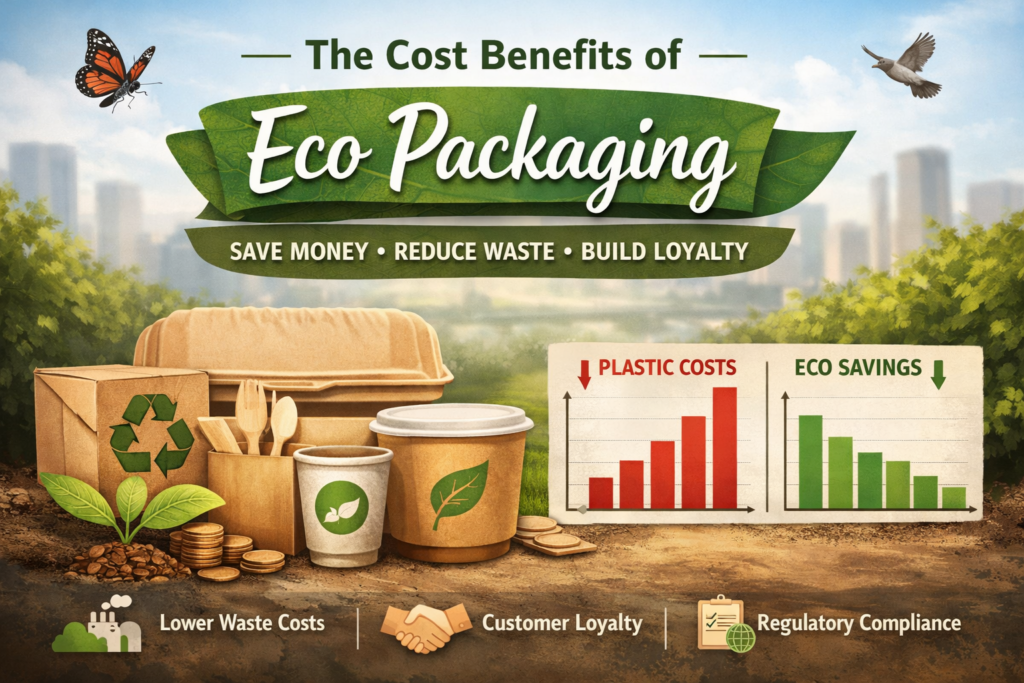
Eco packaging is no longer a niche or “nice-to-have” option—it’s a strategic business decision with tangible financial returns. While traditional plastic packaging often appears cheaper at the point of purchase, that perspective is increasingly outdated. When you factor in lifecycle costs—waste disposal, regulatory compliance, logistics, and brand perception—plastic becomes significantly more expensive over time. In this post, we discuss the cost of benefits of eco packaging and why you should make a switch for your business.
Sustainable packaging solutions—such as compostable, recyclable, and biodegradable materials—not only reduce environmental impact but also unlock measurable cost savings, improve operational efficiency, and strengthen customer loyalty in a market that increasingly rewards responsible brands. You may like to read Why Sustainability Is No Longer Optional
The Hidden Costs of Traditional Plastic
At first glance, plastic wins on price, but that’s only part of the story. Businesses relying heavily on conventional plastic packaging face:
- Rising waste management costs: Non-biodegradable materials accumulate in landfills, increasing disposal fees year after year.
- Regulatory exposure: Governments worldwide are introducing bans, taxes, and penalties on single-use plastics.
- Reputational risk: Consumers are becoming more environmentally conscious, and brands perceived as wasteful risk losing trust—and market share.
- Supply chain volatility: Plastic production depends on petroleum, making costs vulnerable to global oil price fluctuations.
What looks like a “cheap” option upfront often becomes a long-term financial liability.
Long-Term Savings with Eco Packaging
#1: Reduced Waste Expenses
Compostable and biodegradable packaging breaks down naturally, significantly lowering landfill contributions. For businesses that pay for waste hauling or operate at scale, this can translate into substantial recurring savings.
#2: Increased Customer Loyalty (and Revenue)
Modern consumers are actively choosing brands that align with their values. A widely cited study by McKinsey & Company found that 74% of consumers are willing to pay more for sustainable packaging.
That means eco packaging doesn’t just save money—it can also increase margins and drive repeat purchases.
#3: Future-Proof Regulatory Compliance
With global momentum against single-use plastics accelerating (driven by organizations like United Nations Environment Programme, businesses that switch early avoid:
- Sudden compliance costs
- Product redesign expenses
- Fines or operational disruptions
In short, eco packaging is a hedge against regulatory uncertainty.
#4: Operational Efficiency Gains
Many sustainable materials—especially plant-based alternatives—are:
- Lighter, reducing shipping costs
- Space-efficient, lowering storage expenses
- Adaptable, enabling streamlined packaging designs
Over time, these efficiencies compound into meaningful cost reductions across logistics and fulfillment.
Cost Comparison: Eco vs. Plastic
| Factor | Traditional Plastic | Eco Packaging |
|---|---|---|
| Upfront Cost | Lower due to established petroleum supply chains | 20–50% higher for plant-based materials |
| Waste Management | Higher landfill fees, non-biodegradable | Lower disposal costs, compostable options |
| Brand Impact | Risk of reputational damage | Positive perception, stronger brand loyalty |
| Regulatory Risk | Increasing bans, taxes, and fines | Aligned with sustainability regulations |
| Long-Term ROI | Declining as external costs rise | Stronger due to savings + revenue upside |
The Bigger Picture: Competitive Advantage
Eco packaging is not just about cost savings—it’s about positioning. Businesses that adopt sustainable packaging early can:
- Differentiate themselves in crowded markets
- Attract environmentally conscious customers
- Build stronger brand equity
- Stay ahead of policy and industry shifts
In Canada, sustainability is rapidly becoming a competitive advantage as federal and provincial regulations tighten around single-use plastics and waste reduction, pushing businesses toward more responsible packaging solutions.
Key Takeaway
Eco packaging may require a higher initial investment, but it delivers lower total cost of ownership, stronger customer loyalty, and reduced long-term risk. The question is no longer “Can we afford to switch?” It’s “Can we afford not to?”